- Endurance
21 09 2026
17 09 2026
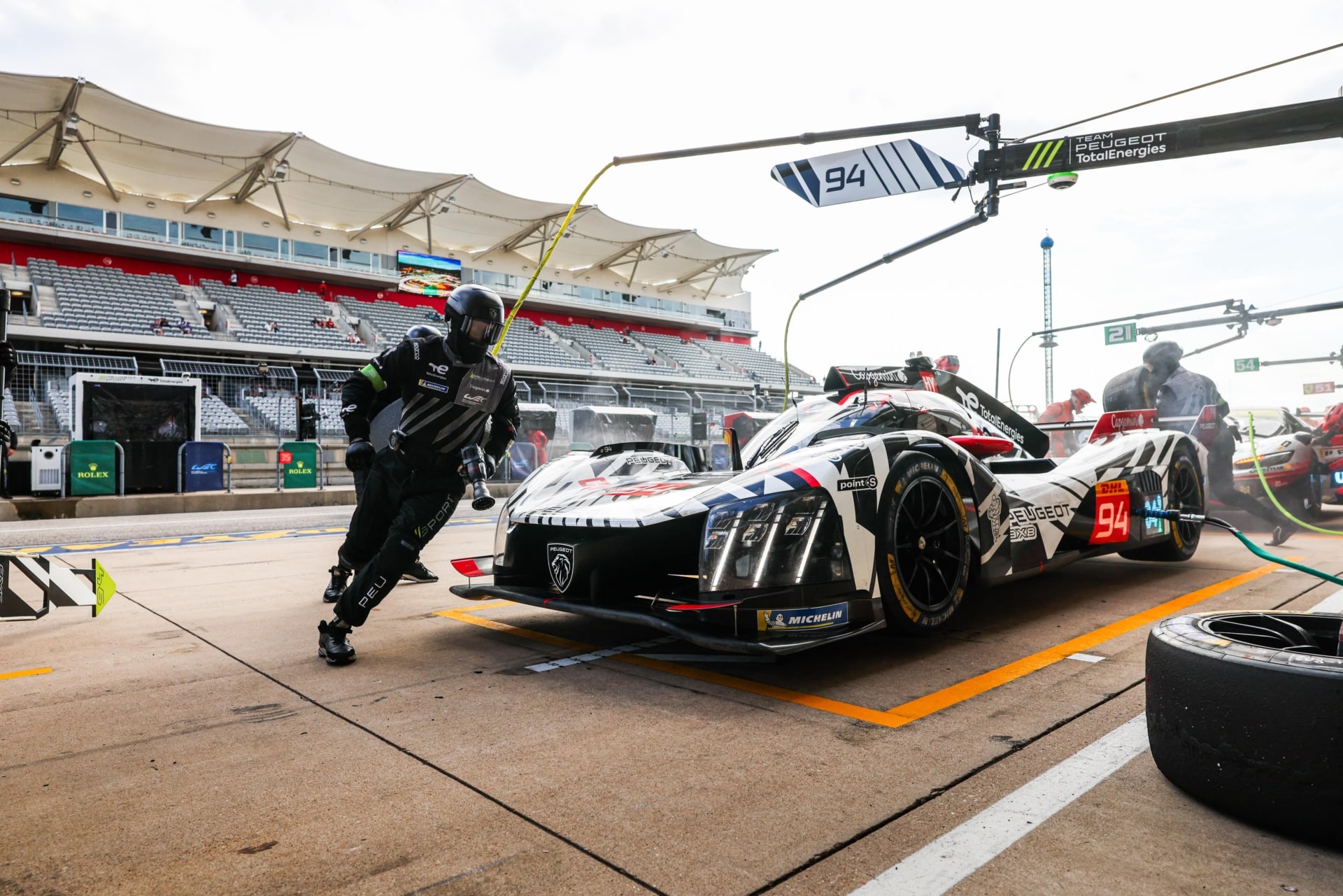
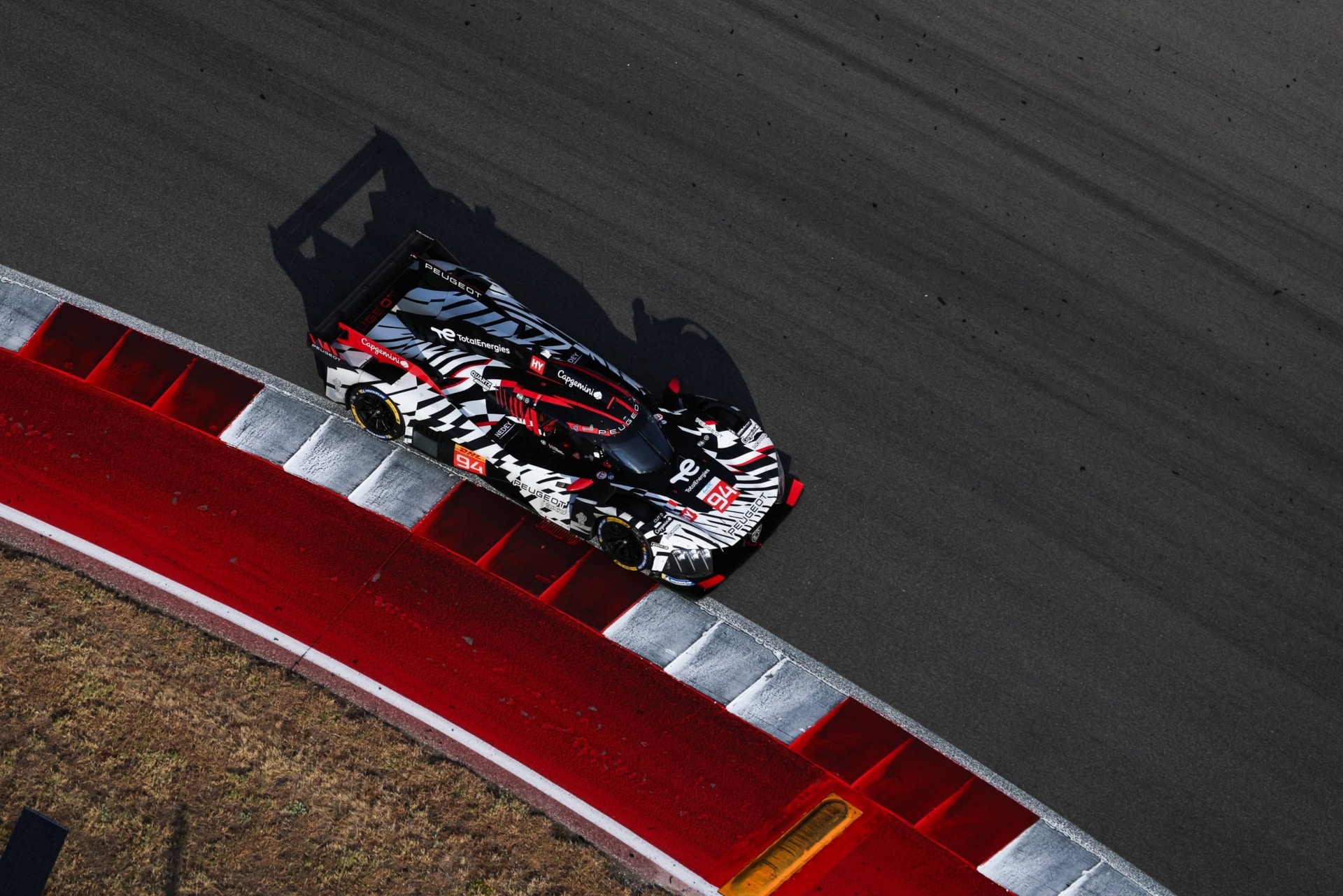
The People Behind Performance: Inside the Design of the PEUGEOT 9X8
Long time before the PEUGEOT 9X8 took to the track for its first race, and even before its initial test kilometres, years of development work had already taken place. Behind every prototype lies the essential yet often unseen work of the Design Office, whose mission is to turn an idea into a race car capable of competing at the highest level.
Engineers create every component of the car in 3D, down to the smallest fastener. They integrate all the parameters that drive the development process, from previous-generation performance data and sporting objectives to regulatory constraints, simulation results and track testing feedback. Their mission is to transform these requirements into technical solutions that directly influence the car’s behaviour and performance.
The true unsung heroes of the programme, they are shaping today the performance of tomorrow. Before joining the FIA World Endurance Championship programme, many built their expertise in other prestigious categories, from the FIA World Rally Championship to Pikes Peak. At Stellantis Motorsport, this diversity of experience enriches everyday operations, as engineers frequently contribute across multiple programmes, alternating between Formula E and WEC projects. This versatility encourages knowledge sharing, technology transfer and continuous innovation.
Coordination and Cross-Functional Expertise: A Shared Commitment to Performance
With more than 30 engineers, the Design Office operates through a cross-functional organisation led by Yann Le Fur. According to the requirements of the FIA WEC and ABB FIA Formula E World Championship programmes, resources and expertise are allocated to efficiently support each stage of development. This approach optimises workload management while providing the flexibility required to launch new projects.
This cross-functionality is also reflected in the teams’ career paths. Most engineers have contributed to the development of both the PEUGEOT 9X8 and Formula E single-seaters, fostering the exchange of expertise and technology transfer between programmes. Today, this dynamic remains one of the Design Office’s greatest strengths.
“I started my career at Citroën Racing in the 1990s before joining Peugeot Sport in the early 2000s. From WRC to Endurance racing, I have had the opportunity to work on a wide range of programmes, including the 908 project. That diversity is a tremendous asset today. It allows us to transfer expertise between projects and make the most of everyone’s experience.”
Simulation Department: Predicting Before Building
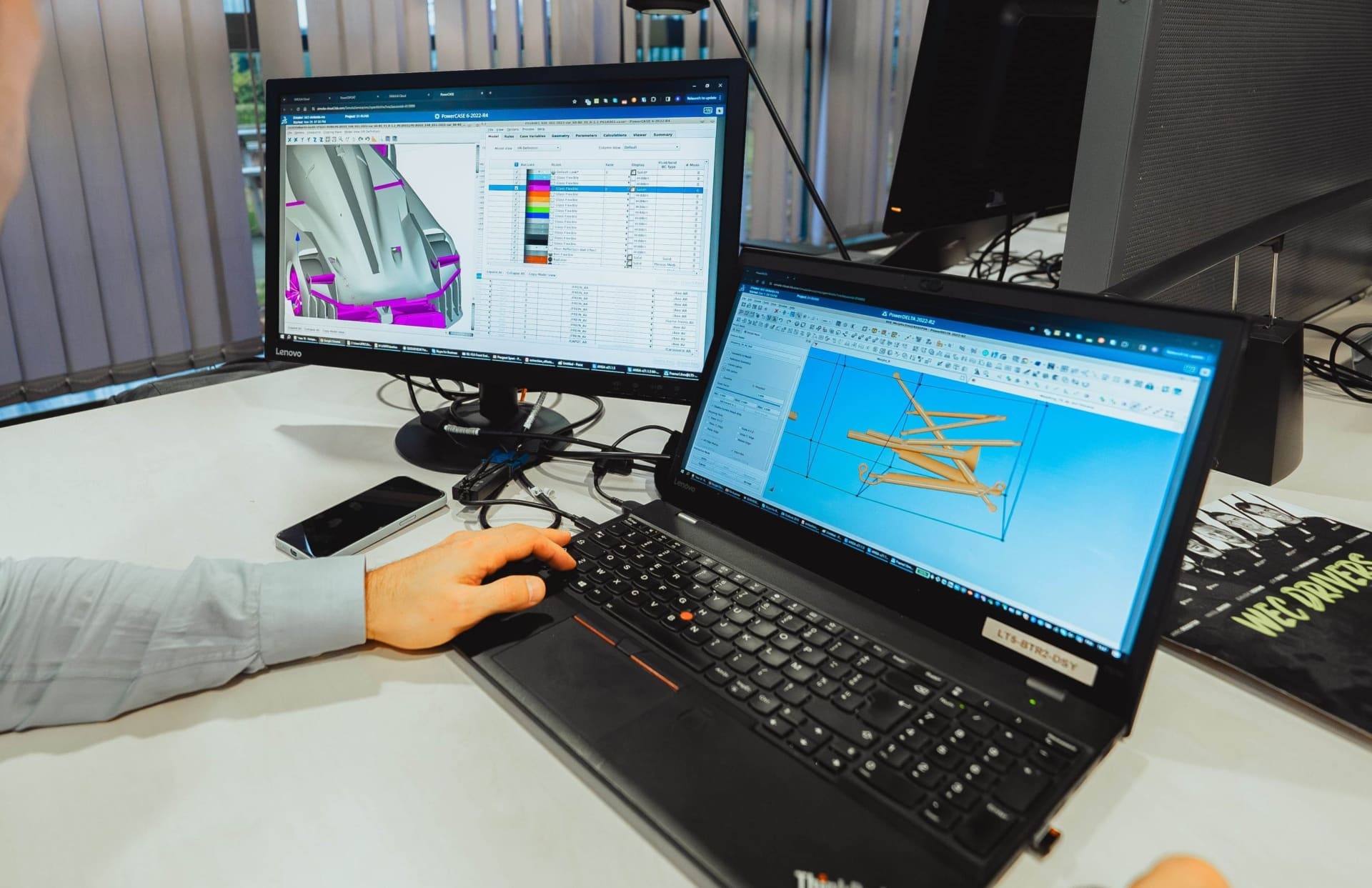
In motorsport development, the process does not begin with manufacturing. Long before a component physically exists, it has already been tested and validated in the virtual world.
“Our role is to help designers dimension components so they can withstand the loads and stresses they will experience in operation,” explains Jean-Marie Lavoisier, Simulation Engineer.
Using advanced simulation tools, engineers analyse the forces acting on the car, from aerodynamic loads on the bodywork and thermal stresses generated by the powertrain to the mechanical loads transmitted through the suspension and wheel assemblies.
Every study takes into account the complete operating environment of the component being analysed. A suspension component, for example, cannot be assessed in isolation from the surrounding systems. All mechanical interactions must be considered to obtain results that accurately reflect real-world operating conditions.
Development relies on a continuous dialogue between simulation and design teams. Based on targets established by the simulation and performance departments, simulation engineers define optimal specifications. Designers then translate these requirements into 3D models, which are subsequently validated through numerical analysis. Multiple iterations are often required before reaching the final solution.
Driver safety-critical components, homologated parts and all strategic performance-related elements of the PEUGEOT 9X8 are naturally subject to particularly advanced analysis and validation processes.
The results take various forms, including engineering data, stress maps and digital animations that reveal component deformation behaviour and potential failure modes.
For engineers, however, nothing can replace validation in the real world. “When a solution performs as intended and contributes to the car’s performance, it is a tremendous source of satisfaction for the entire team.”
Composite & Vehicle Architecture Department: Designing Without Compromise
As Chief Designer of the PEUGEOT 9X8, Lionel Berthier oversees the vehicle’s overall architecture and packaging. His mission is to bring hundreds of components together into a coherent package where every millimetre is fully utilised.
He supervises the work of the design engineers while remaining directly involved in several strategic areas, particularly the suspension systems. His role is built around a constant balance between multiple engineering disciplines. Close collaboration with the aerodynamicists is essential, as the volumes defined by aerodynamic requirements dictate the available space beneath the bodywork and influence the integration of every component on the car.
“Being a vehicle architect is all about compromise. The objective is to build the best car possible while providing the drivers with the best possible driving experience.”
Every decision creates a chain reaction. Relocating a component, increasing downforce or reducing drag often requires a broader rethink of the vehicle’s overall layout and architecture.
The position also demands rigorous programme management. As on the race track, time is always critical. Designers must have sufficient time to complete multiple validation loops with the simulation engineers before testing begins.
“Everyone naturally defends the priorities of their own area of expertise. My role is to bring all those expectations together and create a coherent race car,” explains Lionel.
This search for balance extends beyond outright performance. The vehicle architecture must also facilitate the work of the mechanics. A well-designed race car is also one that is easier to disassemble, repair and return to the track quickly during a race weekend.
Vehicle Dynamics Department: Turning Engineering into Performance
“Designing the components that connect the car to the track” is the core responsibility of Tanguy Lourdelet, Mechanical Design Engineer specialising in vehicle dynamics and suspension systems.
His scope covers all the components that ensure the connection between the car and the asphalt, including wheels, uprights, wishbones, suspension systems and the interfaces linking them to the carbon-fibre monocoque.
Like many engineers within the Design Office, he particularly enjoys clean-sheet projects. These development phases provide greater freedom to explore innovative technical solutions and push engineering boundaries.
The role involves constant interaction with other departments. Even when responsible for a specific area of the vehicle, engineers work closely with their colleagues on a daily basis, challenging ideas and refining technical choices.
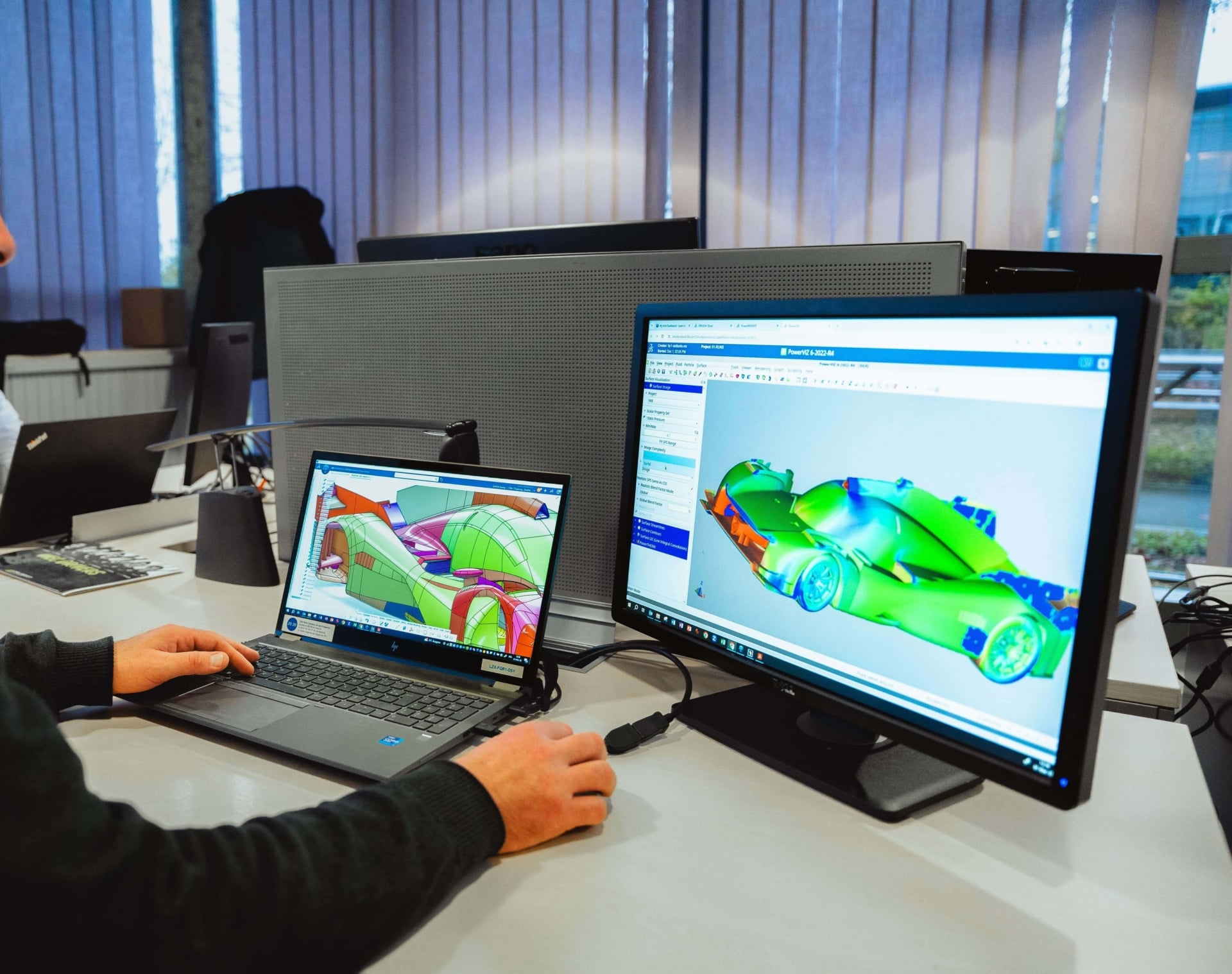
To develop their components, engineers rely on a continuously evolving digital mock-up of the entire car. This virtual environment makes it possible to identify available packaging volumes and anticipate the impact of modifications introduced by other departments.
In a discipline where every gram matters, the pursuit of weight reduction is never-ending. Saving just a few grams on a single component can contribute directly to the overall performance of the prototype.
The ultimate reward remains seeing this work come to life: “Watching a component evolve from a digital concept into a part fitted to the car and ultimately contributing to victory.”
Chassis Department: Building the Vehicle’s Backbone
For Kevin Fishermann, Chassis Design Engineer, every project begins with a set of requirements established by the vehicle architects and specialist engineering teams. His role is to transform those requirements into real-world components using advanced computer-aided design (CAD) tools.
The bodywork perfectly illustrates this process. Starting from validated aerodynamic surfaces, he must define panel splits, integrate fastening systems and develop the carbon-fibre lay-up required for production.
Each component requires extensive collaboration with other departments. The complexity of a part is not necessarily determined by its size, but often by the number of interfaces it shares with surrounding vehicle systems.
Before any component enters production, it is validated within a digital environment. Teams rely on dedicated design spaces and virtual envelopes to verify that no interference exists between different parts of the vehicle.
A brake duct is a perfect example of this complexity. Its design must account for wheel geometry, brake discs, operating temperatures, airflow requirements and the entirety of its surrounding environment.
Material selection is another critical stage. Fibre orientation, fabric weight and carbon weave architecture are carefully tailored to achieve the desired levels of stiffness and strength.
Conversely, certain bodywork components are subject to a constant quest to eliminate every unnecessary gram.
“If a component is well designed, it will not only look right, but also bring the architects’ and engineers’ vision to life as a real solution performing on track.”
Powertrain Department: Bringing the Project to Life
After several years in Formula One, Kendal Beykoylu now works at the interface between the powertrain and the chassis of the PEUGEOT 9X8.
The powertrain is among the first systems to be developed. Its evolution requires extensive dyno testing programmes, while some components involve lengthy procurement lead times, making it one of the key pillars of the project.
The engine directly influences the design of the entire car. Its installation, cooling requirements and exhaust layout affect the overall architecture as well as aerodynamic performance.
In Endurance racing, objectives extend far beyond outright power. The powertrain must remain competitive, reliable and compliant with LMH regulations, while delivering consistent drivability in all operating conditions. “The end customer is always the driver. They should be able to focus on racing, not on how they need to manage the car.”
Every optimisation benefits the vehicle as a whole. Reducing mass in one area may allow another system to be strengthened or improve the car’s overall balance. It is this accumulation of small gains that progressively builds overall performance.
The design process relies first on 3D models before progressing to detailed 2D engineering drawings containing all manufacturing specifications. Produced in accordance with ISO standards, these documents create a universal language that enables suppliers to manufacture components with millimetre-level accuracy.
For him, “The FIA World Endurance Championship remains, above all, an engineers’ championship. In organisations of this size, every contribution quickly translates into a tangible impact on both the car and its performance on track.”
Collective Expertise Driving Performance
While each department brings its own specialist expertise, the success of a prototype such as the PEUGEOT 9X8 ultimately depends on the ability of all teams to work together. A chassis development may influence vehicle dynamics, an engine modification may require a new cooling strategy, while a weight-saving initiative can lead to a redesign of composite components.
It is also through this collaborative approach that teams go beyond pure product development and progressively integrate eco-design principles into their engineering processes. From digital development tools and material selection to component weight optimisation, every decision is made with the objective of balancing performance and environmental responsibility.
This collective intelligence enables all areas of expertise to converge towards a common goal: transforming a blank sheet of paper into a race car capable of taking to the track with the levels of performance and reliability required in the FIA World Endurance Championship.
The Design Office is therefore far more than a development department. It is where technical and technological innovations are born before being transformed into tangible solutions that come to life with every lap completed on track. It is also a laboratory whose innovations help shape the future of road-going vehicles.
Other news
See all
21 09 2026
08 09 2026
06 09 2026
31 08 2026
01 08 2026
28 07 2026
13 07 2026
12 07 2026
06 07 2026
14 06 2026

07 06 2026

03 06 2026

09 05 2026

08 05 2026

04 05 2026

19 04 2026

18 04 2026

14 04 2026

31 03 2026

20 03 2026

26 02 2026

19 02 2026

05 01 2026

11 12 2025

26 11 2025

09 11 2025

08 11 2025

07 11 2025

06 11 2025

03 11 2025

24 10 2025

14 10 2025

28 09 2025

27 09 2025

22 09 2025

11 09 2025

08 09 2025

01 09 2025

13 07 2025

12 07 2025

04 07 2025

15 06 2025

15 06 2025

14 06 2025

11 06 2025

08 06 2025

02 06 2025

10 05 2025

09 05 2025

05 05 2025

20 04 2025

19 04 2025

14 04 2025

24 03 2025

01 03 2025

27 02 2025

22 02 2025

20 02 2025

18 02 2025

06 02 2025

16 01 2025

13 01 2025

06 01 2025

28 12 2024

05 12 2024

28 11 2024

26 11 2024

03 11 2024
03 11 2024

30 10 2024
18 10 2024
14 10 2024
15 09 2024

02 09 2024
29 08 2024

14 07 2024

16 06 2024
12 06 2024

09 06 2024

07 06 2024

29 05 2024

16 05 2024

11 05 2024
21 04 2024
20 04 2024
16 04 2024

23 03 2024

03 03 2024
01 03 2024

20 02 2024

14 02 2024
30 01 2024

24 01 2024

19 01 2024

16 01 2024

05 01 2024
03 01 2024

21 12 2023
18 12 2023
04 12 2023
27 11 2023
21 11 2023

06 11 2023
04 11 2023
03 11 2023
30 10 2023

09 10 2023
21 09 2023
10 09 2023
09 09 2023
28 08 2023

22 08 2023
19 07 2023
14 07 2023
09 07 2023

08 07 2023

03 07 2023
30 06 2023
11 06 2023

11 06 2023

10 06 2023
09 06 2023
07 06 2023
04 06 2023

03 06 2023
02 06 2023
22 05 2023
29 04 2023
28 04 2023
25 04 2023
20 04 2023
16 04 2023
15 04 2023
14 04 2023
11 04 2023

18 03 2023
17 03 2023
08 03 2023
20 01 2023

05 01 2023

16 12 2022

08 12 2022
25 11 2022
13 11 2022
11 11 2022

07 11 2022
04 11 2022
17 10 2022

10 10 2022
04 10 2022

23 09 2022

19 09 2022
15 09 2022

11 09 2022

10 09 2022
26 08 2022

16 08 2022

09 08 2022
01 08 2022

25 07 2022

21 07 2022
10 07 2022
09 07 2022

04 07 2022

20 06 2022
08 06 2022

23 05 2022

16 05 2022
05 05 2022

06 04 2022
25 02 2022
21 02 2022
20 01 2022
18 01 2022
12 01 2022
11 01 2022
30 11 2021

29 09 2021
06 07 2021
08 02 2021